
What Really is Embodiment?
Some thoughts on a definition

I was almost 40 years old by the time I began to appreciate the amazing holiness of my embodied experience. I still remember when I first noticed how much more sacred the natural world felt when I was fully present in my physical body. It was a gorgeous fall day—clear, cool, and breezy—and I was hiking with a friend in a wilderness area in southern Ohio. The trees were at their peak of fall color, rich hues of orange, bright yellow and deepest red. The trail had taken us along a stream, its banks overflowing with ironweed, goldenrod and cardinal flower for a rainbow of color.
After a little while we turned a corner and started heading up a hill into a dense tall forest dotted with boulders. I felt my leg muscles engage as we walked up the slope, adjusting to the varied terrain as my body warmed up and I started to breathe more heavily. Walking on a soft carpet of fallen leaves, the whole forest felt vibrantly alive, and I felt a holy energy rising up through my feet and torso all the way up to the top of my head. I was an animal body, making my way through the forest, completely awake.
What stood out to me most about this experience was the profound sense of being at home both in my body and on the earth. I felt entirely present to what was happening around me and inside me. Not bogged down by thoughts about the past or the future, I was free to be fully awake in that moment, in that particular patch of forest on that fall morning. And being present in my body wasn’t about lack of pain. My knees still ached and my back was sweaty. It was the realness, the total immersion in experience that was important in that moment. All of these sensations felt holy.
Our bodies are amazing, an amalgam of bone and blood and skin that is incredibly alive. Our bodies are also places of connection. We encounter the Sacred, we encounter the earth, and we encounter each other only through the mediating presence of our bodies. As much as we might feel at times like simply minds walking around in a physical frame, every sensation makes us who we are.
Embodiment is increasingly becoming a popular topic among religious thinkers, but like sustainability, it’s a little amorphous and can be hard to define. At its most fundamental level, to be aware of my embodiment is to be awake to the overwhelming beauty of life. To feel my heart beating and lungs moving my torso, to feel the grass beneath my feet. And in all of these sensations I am connected to the natural world, surrounded and enveloped. Even when I am numb to these connections and sensations, I remain an embodied being, but I can no longer tap into this wellspring of energy that conscious connection brings.
Mindbody practitioner Kardin Rabin defines embodiment as “the act of expanding one’s self awareness to include the felt experience of the body, such as sensory, sensational, emotional and physical experiences, and incorporating that information into one’s overall conception and conduct of themselves, their identity, beliefs, behaviors, and ways of being.”[i] Life becomes richer when we are aware of our own embodiment. The world is brighter, more immediate, when we aren’t stuck in our minds but aware of the fullness of our experience.
At this moment in my life, embodiment also means being aware of myself as a body full of ability and vibrancy—being able to jump and run and scramble up a hill. When I am able to do these things, I feel so present, like a strong engine humming, ready to kick into high gear if needed, even if there might be joint pain after. This wasn’t always the case. At other times in my life embodiment has meant an awareness of the limits of my ability to move on my own without assistance, or of the beautiful symmetry of propelling my wheels down a newly-paved trail. And in still other seasons, embodiment has meant only an awareness of myself as a body in pain. Embodiment is simply being present with wherever we are, whatever feelings course through us.
In addition to awareness, embodiment is also a means of connection. When I am awake to my own embodiment, I notice the cardinal singing on a tree branch over my head and a wren chipping from the nearby fence, protecting her nest from an unseen foe. I feel the grass beneath my bare feet and am awed when the shadow of a Red-Tailed Hawk crosses my face. In essence, I feel like a part of the natural world that surrounds me, even in the urban wilderness of my neighborhood. Embodiment also provides us with a connection to others. I didn’t realize how important everyday physical touch was to my life until it was suddenly stripped away during the pandemic. Even my partner was afraid of getting close to me because she was a frontline worker and worried about exposing me if she had become infected with COVID. Hugging a parent, holding a loved one’s hand, or even just being present in the same room with others are basic forms of human connection that our embodiment makes possible.
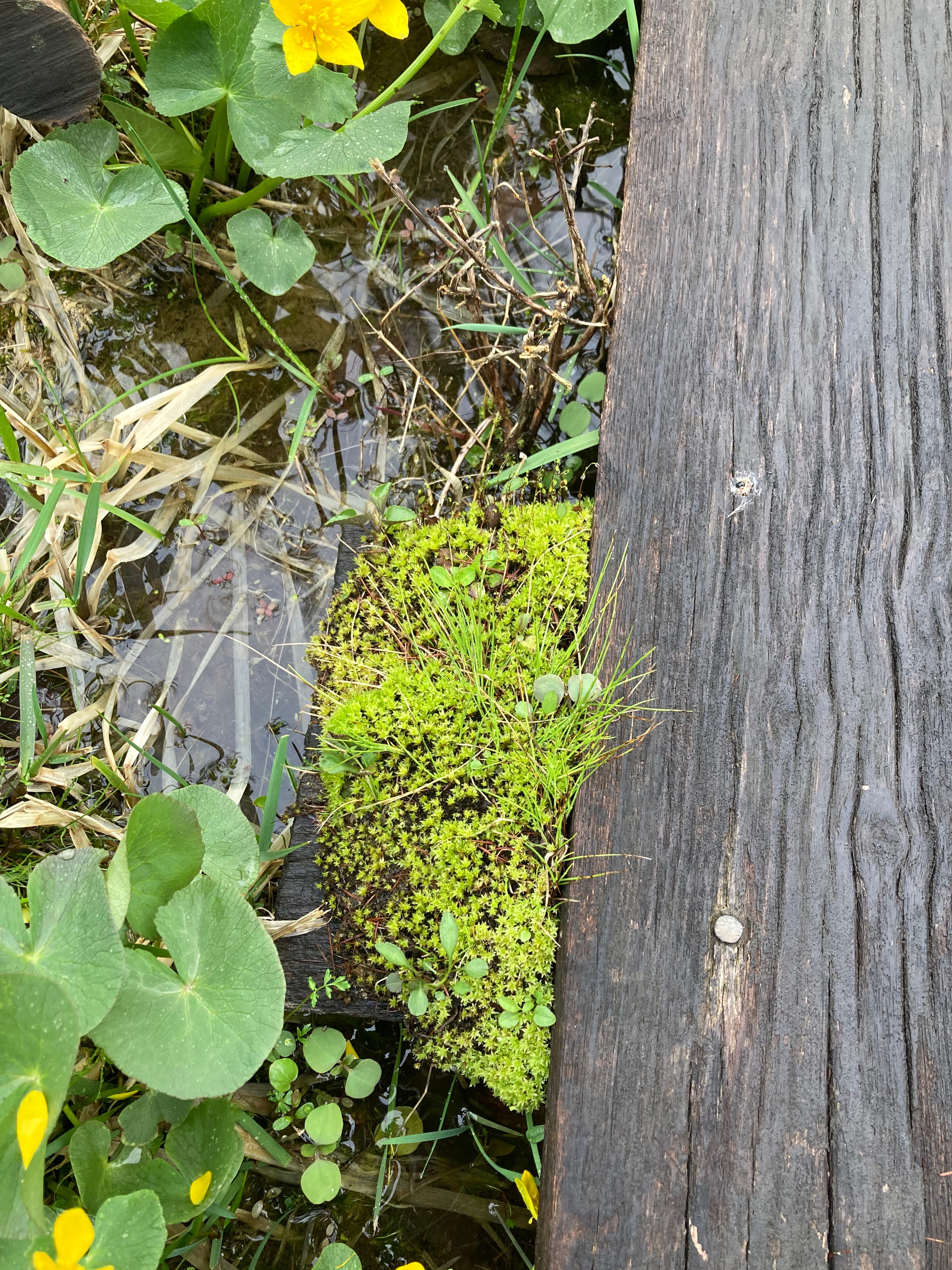
The most powerful but elusive aspect of embodiment is connection with God, the Sacred, or Ultimate Reality, however you choose to define it. It is a feeling that encompasses all of these other aspects of embodiment. I feel connected to the Sacred when I sit in my own backyard, fully present in my body on a warm summer evening watching the sunset. I feel connected to the Sacred when I am in the middle of the wilderness, wandering around watching waterfalls and touching soft moss. Holiness in a real sense is what underlies all of these experiences. It isn’t separate. I feel it in the love between people and when I taste something delicious.
This doesn’t feel like what I ought to think of when I contemplate closeness to God, though, because I have been unconsciously shaped by Western Protestantism to consider God as something separate and cerebral. And really, the word God is part of the problem, at least for me, because I associate God with religion, with church, with theology, with an old man in white robes sitting on a cloud in the sky. The Sacred, the Holy, Spirit, these are all easier terms to relate to this joyous loving presence I feel at times when I am present in my body in the face of reality, of ultimate existence, first because they don’t have a gender and so don’t connote particular images, and second, because they appeal to the realm of immediate experience rather than the mediating role of church, theology, official religious doctrine.
My intent here is not to demean theology or formal religion. There is a place for both and they are both an important part of my life, both personal and professional. But I don’t talk to the Divine through theology or through the church. I encounter Her in my body, through my senses, in that stillness I have in rare moments during meditation. Religion and theology aren’t useful languages in the actual presence of the Holy. There is only awe and praise and overwhelming joy.
[i] Karden Rabin, “Defining Embodiment” Trauma Research Foundation
Sarah, I love your connectedness between embodiment & creation. While I am in a wheelchair, I too feel the same entwining with spaces as I st/roll through my neighborhood & local parks.
I am curious on your relating to God and divine nature. Do you see God as having personal character whether as an individual or Trinity?
There is also a curiosity to your exploration of divine gender. Did you know in Jewish theology, the word for God‘s spirit is Shekinah? Loosely translated it means “dwelling” or “settling“. In Jewish language, it is given a feminine gender. Long story short, the tradition carries that the Holy Spirit is feminine in nature. Similarly, in the Greek language wisdom is given a feminine nature — Sophia.
While human language fails to really articulate any real embodiment to the nature of God or the divine, you can say in essence that the Trinity embodies both masculine and feminine qualities.
I hope it is OK in sharing some of these thoughts. It’s just my hope to maybe resonate with you in how both humanities expressions of gender can find certain embodiments in connection to God and the divine while not excluding the complexities of relational entwining.
As to religion… I think there is merit to the language as Brian McLaren has articulated in his book, ‘Naked, Spirituality’. But yes, I have long separated the two understandings of God and religion.
Thanks for sharing your wonderful post.